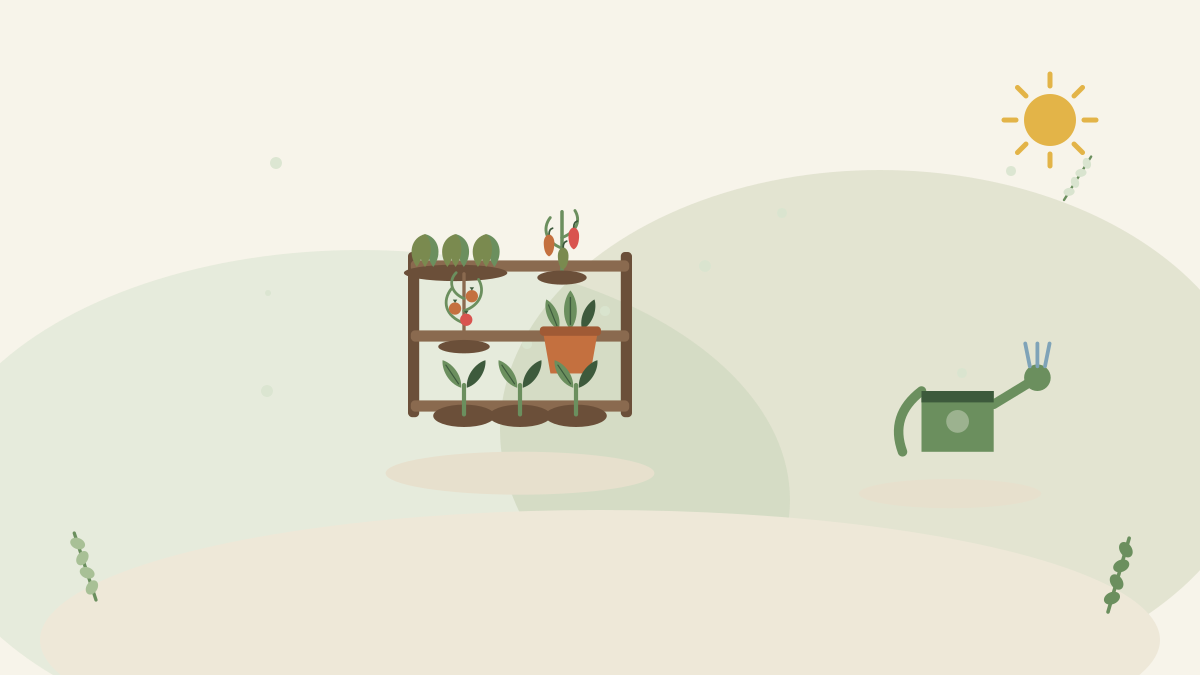
Let us be honest at the outset: a balcony will not make you self-sufficient. What it will do — and this is worth far more than the modest square footage suggests — is hand you a bowl of salad leaves cut minutes before dinner, herbs that transform cooking, and tomatoes warm off the vine with a flavour that makes supermarket ones taste of nothing. Balcony vegetable growing is not about volume; it is about freshness, flavour, and the daily pleasure of tending something that feeds you.
And it genuinely works, provided you respect the three things that decide the whole enterprise: how much sun the balcony gets, how big your containers are, and how honestly you water. Get those right and even a small, breezy ledge produces real food for months. This guide runs all three, then the crop choices, the vertical tricks that multiply the space, and the wind and weight realities of gardening up high.
First, Read Your Sun (Everything Depends On It)
Before buying anything, spend a sunny day noticing when and for how long direct sun actually lands on your balcony — the FAQ's ruthless sorter. Surrounding buildings, the balcony above, and the direction you face turn two identical-looking balconies into completely different gardens:
- Six-plus hours of direct sun: the full menu is open, including the fruiting stars — tomatoes, peppers, chillies, courgettes, aubergines.
- Three to four hours: a productive leaves-and-herbs balcony — lettuce, salad leaves, spinach, chard, kale, and most herbs thrive, and actively prefer the shade in high summer.
- Mostly shade: not a failure but a different garden — the shady-balcony guide's leafy crops, mint, and foliage. Fruiting crops here will only disappoint.
Match ambition to sun and the balcony rewards you; fight it — chasing tomatoes on a three-hour ledge — and it frustrates you all summer.
Containers: Bigger Than You Think
The FAQ's size rule is the one that saves the most first-year disappointment: match the pot to the plant's root ambition, and err large. Small pots are the balcony's classic trap — they dry to dust by midday and keep plants permanently stressed and hungry.
| Crop | Minimum container | Note |
|---|---|---|
| Salad leaves, herbs | Shallow troughs, small pots | The easiest, fastest wins — start here |
| Lettuce, spinach, chard | 15–20 cm deep containers | Cut-and-come-again for months |
| Tomato, pepper, chilli | 20–30+ litre pot each | Enough soil to hold water and food all day |
| Courgette, aubergine | Large pot / half-barrel | Hungry, thirsty, and space-hungry |
| Root crops (carrots, radish) | Deep pots / grow bags | Depth matters more than width |
| Strawberries | Troughs, hanging pots, towers | Superb balcony crop, ideal for vertical |
Drainage holes are as non-negotiable here as anywhere — and a saucer under each catches the run-through (and, on a balcony, stops it raining on the neighbour below).
Grow Up: The Vertical Multiplier
The defining move of small-space food growing is using the air. A balcony's floor is small, but its walls, railings, and vertical space are the hidden acreage:
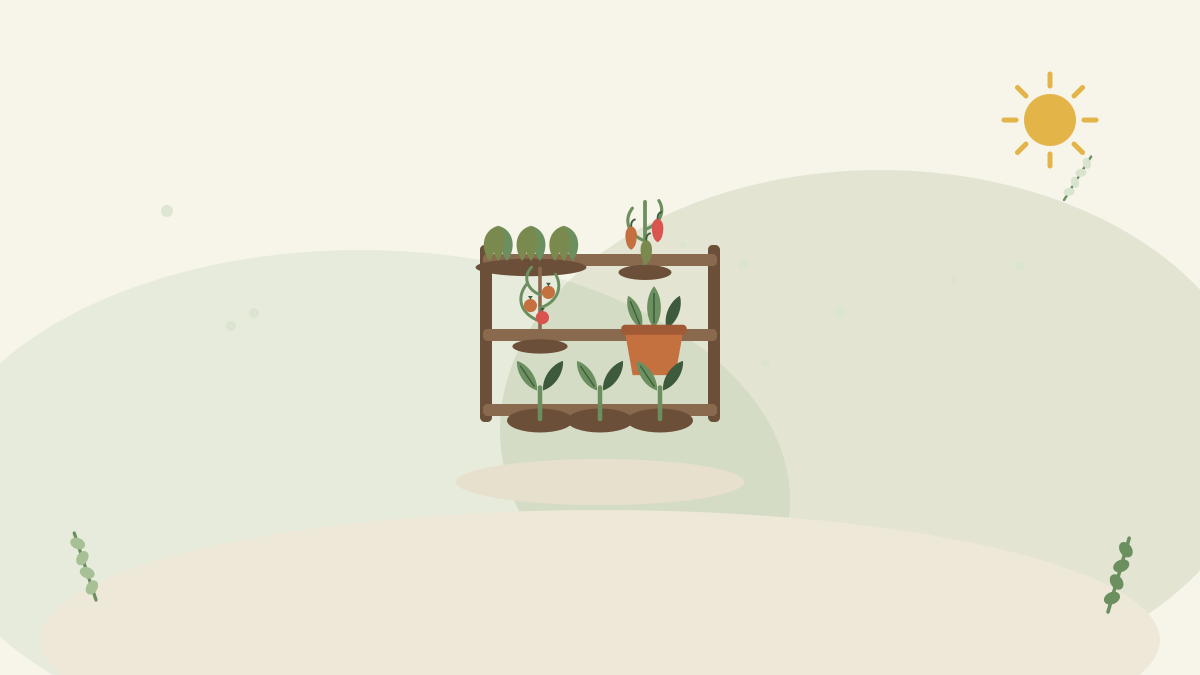
- Shelving and tiered stands turn one square metre of floor into three or four of growing space — the pallet-garden and vertical-growing logic applied to food.
- Railing planters line the balustrade with salads and herbs without using an inch of floor.
- Wall-mounted pots and pockets put trailing tomatoes, strawberries, and herbs at eye and hand height.
- Climbers on a trellis or netting — beans, peas, cucumbers, cordon tomatoes — grow up a wall or railing and crop heavily from a small footprint.
- Hanging baskets for tumbling tomatoes and strawberries use the ceiling itself.
The one rule when stacking vertically: don't let upper plants shade out the lower ones — put the tall and the sun-hungry where they won't cast the shorter crops into shadow, and remember the FAQ's watering note that upper shelves dry fastest.
Watering and Feeding: The Honest Discipline
- Summer means daily checking for sunny-balcony pots — the FAQ's stacked tricks (big pots, grouping, mulch, water-retaining or self-watering containers) reduce the burden but do not abolish it. This is the single habit that makes or breaks the balcony garden.
- Water deeply until it runs from the drainage hole, in the morning where possible, at the soil not the leaves — the whole-site watering doctrine in miniature.
- Containers need feeding because the compost's bundled nutrition runs out by midsummer: a weekly liquid feed once plants are established, and a high-potash feed for the fruiting crops once they flower, exactly as the tomato and pepper guides prescribe.
- Rainwater helps — even a small collected supply softens the daily round and pleases the plants, the balcony version of the harvesting guide.

Self-Watering Containers: The Balcony Game-Changer
If there's one upgrade that transforms balcony growing from a demanding daily chore into a manageable one, it's the self-watering container — a pot with a water reservoir in the base that the plant draws from as needed. For the thirstiest crops (tomatoes, peppers) on a hot sunny balcony, they're close to essential: the reservoir buffers a day or two of missed watering, delivers consistent moisture (which prevents the blossom-end rot and split fruit that erratic watering causes), and makes a weekend away survivable. You can buy them or improvise the principle with a reservoir and a wicking system. They don't abolish watering — you top up the reservoir instead of the soil, less often — but they turn the make-or-break daily discipline into something forgiving. On a balcony where you can't always be there at midday, that forgiveness is the difference between a harvest and a row of crispy casualties.
Starting Out: Seeds or Plants?
The balcony grower faces the same choice as any gardener, with the space constraint tilting it. Buying young plants ("plugs") from a garden center is the faster, more reliable route for the fruiting crops — a single healthy tomato plant costs little and skips the fussy early weeks, ideal when you only have room for two or three plants anyway. Growing from seed is cheaper per plant, offers vastly more variety than any shop stocks, and is genuinely satisfying, but needs a bright windowsill for starting and more patience — the seed-starting guide covers the indoor setup. The pragmatic balcony approach: buy plants for the few big fruiting crops where one good specimen matters, and sow seed for the cheap-and-abundant salads and herbs you'll want in quantity and succession. A packet of lettuce seed outproduces any tray of bought seedlings for a fraction of the cost.
The Best Balcony Crops (Ranked by Reward)
- Herbs — the highest reward per effort and space: basil, mint (in its own pot, it's a thug), parsley, chives, thyme, coriander. Expensive to buy, trivial to grow, harvested by pinching.
- Salad leaves — cut-and-come-again lettuce and mixed leaves give weeks of harvest from one shallow trough; sow a little every fortnight per the salad guide's succession.
- Tomatoes — the flavour headline, if you have the sun and a big enough pot; bush and tumbling types for baskets, cordons up a cane. The container-tomato guide is the deep dive.
- Chillies and peppers — compact, productive, and genuinely happy in pots on a hot sunny balcony.
- Strawberries — made for troughs, towers, and baskets; a sunny railing of strawberries is pure joy.
- Radishes and quick roots — fast, easy, and satisfying for the impatient and for children.
Pests and Problems, Balcony-Scale
Balconies get pests too, though height thins some out. The usual suspects and honest responses, drawn from the site's pest playbook: aphids arrive on the wind and colonize soft tips — squash them, blast them off with water, and welcome the ladybirds that surprisingly find their way up high; slugs and snails are genuinely rarer several floors up (one quiet perk of balcony growing, as the shady-balcony guide notes), though ground-floor and first-floor balconies still get them; and the enclosed warmth against a sunny wall can breed spider mites in dry spells, answered by the humidity-and-shower treatment. The bigger balcony-specific problems are environmental rather than biological: erratic watering causing blossom-end rot and split tomatoes, wind scorch and breakage, and the sheer stress of small pots in big heat. Powdery mildew turns up late season on courgettes and in crowded corners, met with airflow and the milk-spray program. On the whole, a balcony is a lower-pest environment than a garden — the isolation that makes it hard for some plants to get pollinated also makes it hard for many pests to arrive.
Pollination Up High
One quirk of growing fruiting crops away from a garden: pollinators may need help finding you. Bees and hoverflies do reach balconies, especially if you grow a few flowers among the vegetables to draw them in — a genuinely useful trick that doubles as beauty. But for the self-pollinating crops like tomatoes and peppers, you can guarantee fruit set yourself: a gentle daily shake of the flowering plant, or a soft touch of each open flower, moves the pollen that a still, insect-poor balcony might otherwise leave un-transferred. Courgettes and cucumbers, which have separate male and female flowers, sometimes need hand-pollination up high — transferring pollen from male to female flower with a small brush or by touching the flowers together. It sounds fiddly but takes seconds and turns flowers that would drop unfertilized into actual food.
Wind, Weight, and the Realities of Height
- Wind is the underrated enemy: balconies, especially higher up, funnel and gust in ways gardens don't — wind dries pots faster, batters tall plants, and can topple top-heavy containers. Shelter with a windbreak screen or trellis, keep the tallest plants against the wall, and stake cordon crops firmly.
- Weight deserves the FAQ's genuine thought: wet soil is heavy, so favour lightweight pots and composts, keep the heaviest containers near the wall or load-bearing edges rather than massed at the railing, and check with building management if you're in any doubt about your structure.
- Be a good neighbour: saucers to catch drips, secure everything against wind so nothing falls, and mind where run-off and trailing plants go over the edge.
- Heat traps and cold pockets: a sunny balcony can bake against a reflective wall (great for chillies, tough on lettuce) while a shaded corner stays cool — use both microclimates deliberately.
The Season on a Balcony
| When | The work |
|---|---|
| Early spring | Start seeds on a windowsill; plan the layout by sun; get containers and compost ready |
| Late spring | Plant out after frosts; set up vertical structures and supports; first salad sowings |
| Summer | Daily watering; weekly feeding; constant harvest and deadhead-equivalent picking; succession-sow salads |
| Autumn | Last harvests; sow overwintering salads and hardy herbs; clear and store spent containers |
| Winter | Hardy herbs and winter salads tick over; plan next year; the balcony rests |
The Bottom Line
A balcony vegetable garden trades volume for something better: flavour, freshness, and the daily pleasure of growing food where you live. Read your sun and let it choose your crops honestly; go big on containers and err larger; grow upward to multiply the space; and commit to the summer watering discipline that makes the whole thing work. Add weekly feeding, mind the wind and the weight, and pick constantly to keep it coming. Do that, and a few square metres of ledge will hand you salads, herbs, and sun-warm tomatoes all summer — proof that you don't need a garden to grow real food, only a sunny edge and the honesty to tend it.
Comments
No comments yet. Be the first to share your experience.