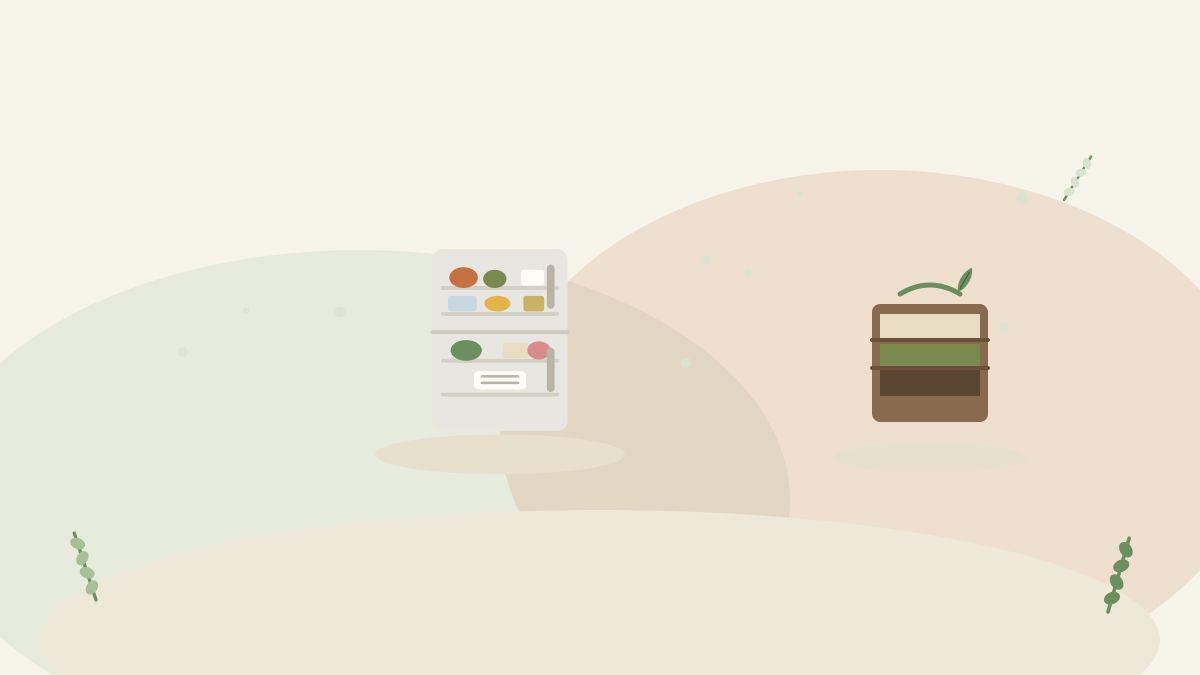
Open almost any household bin and the story is the same: half a bag of salad that turned to slime, bread that went stale behind the fruit bowl, a container of something excellent from last week that nobody remembered was there. The overwhelming majority of food wasted at home was not spoiled by bad luck — it was forgotten. Which is oddly good news, because forgetting is a solvable problem, and solving it needs no special equipment, no products, and barely any effort.
This guide covers the habits that genuinely cut household food waste: planning and shopping in a way that matches reality, storing food so it lasts as long as it should, reading date labels correctly rather than fearfully, using up what you have, and — last, deliberately last — composting what truly cannot be eaten.
Why It Matters (Briefly)
Wasted food carries every cost that went into producing it: the water, land, energy and transport behind it, plus the money you paid. That makes reducing it one of the highest-impact and least demanding sustainability actions available at home — no purchases required, and the savings are immediate and personal rather than abstract. It sits comfortably alongside the site's other honest sustainability positions: the biggest wins are usually behavioural, not products, and the most sustainable thing is almost always to use fully what you already have.
Start Where the Waste Starts: Buying
- Check before you shop. The FAQ's highest-impact habit begins here: a two-minute look in the fridge, freezer and cupboards prevents the duplicate purchases that become the forgotten items.
- Shop to a rough plan, not a rigid one — a loose sense of the week's meals prevents both impulse buying and the "I'll think of something" purchases that never get used.
- Be honest about your week. Most over-buying is optimism: the vegetables bought for the cooking you intended to do rather than the cooking you will actually do.
- Watch the bulk-deal trap: multi-buys are only savings if you eat all of it. For perishables, they frequently are not.
- Buy loose where you can, taking the quantity you need instead of the pack size someone else chose — which also cuts packaging, per the reduce-plastic guide.

Storage: Where Most Food Is Quietly Lost
Good storage buys days or weeks, and the FAQ's fridge rule is where to start: not everything belongs in the fridge.
| Food | Best kept | Why |
|---|---|---|
| Potatoes, onions, garlic, squash | Cool, dark, airy — not the fridge | Cold damages texture and flavour; darkness stops sprouting and greening |
| Tomatoes | Room temperature | Refrigeration dulls flavour and turns texture mealy |
| Bananas and some tropical fruit | Room temperature, away from other produce | Cold damages them; they also release ripening gas |
| Apples, and other ethylene producers | Separate from sensitive vegetables | Ethylene gas ripens and spoils neighbours faster |
| Leafy greens and salad | Fridge, not wet, not bone dry | Salad dies either by drying out or sitting in moisture |
| Soft herbs | Stood in a little water like cut flowers, or loosely wrapped and chilled | Dramatically extends life over loose in a drawer |
| Bread | Cool and wrapped, or sliced and frozen | The fridge stales bread faster; the freezer pauses it entirely |
Two organising habits multiply the effect of all of the above: older items at the front so they get used first, and an "eat me first" zone — a shelf, box or tray where anything approaching its limit lives in plain sight. Visibility is the whole game, which is why this is essentially the kitchen-organisation guide's logic applied to the fridge.
Date Labels: Read Them Properly
The FAQ's distinction is worth internalising because it prevents so much unnecessary waste:
- "Use by" is about safety. On perishables like meat, fish and some dairy, respect it regardless of how the food looks.
- "Best before" is about quality. Many foods — dried goods, tinned items and plenty besides — remain perfectly usable beyond it. Judge with your senses.
- Storage assumptions matter: dates assume the food was kept as instructed. Poor storage shortens them; freezing before the date effectively pauses the clock.
- Trust your senses on best-before foods, and when something is genuinely questionable — off smell, visible mould on the wrong sort of food, anything doubtful in the use-by category — don't gamble. Safety wins over thrift; the point is to stop discarding food that was never a risk in the first place.
Using What You Have
- Run a weekly "use it up" meal. A soup, stir-fry, frittata, curry, pasta or tray bake built from whatever needs eating turns odds and ends into a routine rather than an afterthought — the FAQ's most practical single habit.
- Cook to appetite, not to the packet. Consistently cooking more than gets eaten produces leftovers that then get forgotten twice.
- Treat leftovers as ingredients: cooked vegetables into soups and omelettes, roast meat into sandwiches and stews, stale bread into toast, croutons or breadcrumbs.
- Use the parts you usually discard where sensible — vegetable trimmings for stock, herb stalks in cooking, broccoli stems and carrot tops all being perfectly good food.
- Revive rather than bin: limp vegetables often perk up in cold water, tired bread refreshes with heat, and slightly soft fruit is ideal for cooking, smoothies or baking.
- Portion before storing, so leftovers are ready to grab rather than needing effort at exactly the moment you have none.
The Freezer: The Most Underused Tool in the House
- Freeze before, not after, the crisis — the freezer pauses food at its current quality, so freeze things while they are still good rather than as a last resort.
- Label everything with contents and date. An unlabelled freezer becomes an archaeological site, and archaeology is how freezer food gets wasted.
- Freeze in usable portions so you thaw only what you need.
- Surprising things freeze well: bread, milk, cheese (for cooking), herbs in oil or water, cooked rice and pasta, and most cooked meals.
- Keep an inventory, even a scrap of paper on the door, and run an occasional "freezer week" to eat down the backlog — otherwise the freezer quietly becomes long-term storage for food you will never actually eat.

Sharing the Surplus
Not every surplus is a waste problem — some of it is a distribution problem, which is a much easier one to solve. The gluts the vegetable guides cheerfully predict (courgettes especially) are best handled by giving them away, and the same applies to bulk purchases, leftovers from gatherings and anything you simply will not get through. Neighbours, friends, colleagues and community food-sharing schemes all absorb surplus that would otherwise rot, and in many places food-sharing apps and community fridges make it straightforward. The garden version of this loop is well established on this site — the neighbour who waters your pots while you are away, paid in vegetables — and it works just as well in reverse. Food shared is food that did its job.
Where Composting Fits (Last)
The FAQ is unambiguous: composting is the safety net, not the strategy. Genuinely inedible scraps — peelings, cores, coffee grounds, spoiled food — should absolutely be composted rather than binned, and this site has whole guides on how (the compost bin for gardens, the worm bin for flats). But composting edible food that could have been eaten still wastes the water, land, energy and money behind it, and no amount of virtuous composting recovers that. The order is: buy what you will eat, store it well, use it up, share the surplus, freeze what you can — and compost only what is genuinely beyond eating. A well-run kitchen produces a modest, steady stream of compostable scraps; it does not funnel meals into the compost bin and call it sustainability.
Measure Once, Then Adjust
One exercise changes behaviour more than any list of tips: for a single week, keep a note of everything you throw away and why. Not to feel guilty — to find the pattern, because almost every household has one, and it is usually specific and fixable. Some people discover they buy salad every week and eat it once; others find the same half-used jar recurring, or bread bought in quantities that never get finished, or an entire category of good intentions rotting in the vegetable drawer. Once the pattern is visible, the fix is usually obvious and small: buy the smaller loaf and freeze half, stop buying the salad and buy the vegetable you actually eat, cook half the amount. This is the same measurement principle the garden notebook uses in the summer checklist — memory quietly edits out precisely the failures worth fixing, while a week of honest notes puts them in front of you. Do it once a year and the habits stay tuned.
Where the Waste Hides
Beyond the fridge, a few predictable blind spots account for a surprising share of household food waste. The back of the cupboard collects tins and packets bought for a recipe made once, which quietly pass their dates unnoticed — an annual cupboard audit, moving older items forward, catches them while they are still perfectly good. The freezer, as noted, becomes an archive rather than a store without labels and an occasional eat-down week. Fruit bowls hide their own casualties underneath the top layer, so rotating the bowl matters as much as rotating the fridge. Packed lunches and takeaway leftovers get put down and forgotten in exactly the containers that make them invisible — clear ones help more than they sound like they should. And holidays are a reliably wasteful moment: running the fridge down deliberately in the days before travelling, rather than shopping normally until the last minute, prevents the traditional post-holiday clear-out of everything that spoiled while you were away.
Cooking Habits That Waste Less
A few kitchen habits quietly prevent waste before it can happen. Cooking components rather than fixed dishes — a batch of grains, a tray of roasted vegetables, a pot of beans — gives you parts that combine into several different meals rather than one dish that must be eaten in exactly that form or not at all. Learning three or four flexible template meals that accept almost any ingredient (soup, frittata, fried rice, tray bake) means nothing is ever left over without a destination. Tasting and seasoning as you go prevents the batch that nobody wants to finish. And cooking slightly less than you think you need, with bread or something simple to fill the gap, wastes far less than the reverse: leftovers that get eaten are a good system, leftovers that accumulate are just delayed waste. None of this requires skill so much as a shift from cooking recipes to cooking with what is in front of you.
The Classic Mistakes
- Shopping without checking what you already have.
- Treating "best before" as a disposal deadline.
- Refrigerating things that hate the cold, shortening their life.
- Burying older items behind newer ones, guaranteeing they are forgotten.
- Freezing without labelling, creating a mystery archive.
- Composting edible food and calling the problem solved.
The Bottom Line
Household food waste is mostly a visibility and sequencing problem, not a spoilage one — which means the fixes are unglamorous, free, and genuinely effective. Check before you shop and buy to a realistic plan. Store things where they actually keep best, with older items at the front and an eat-me-first zone in plain sight. Read date labels for what they mean rather than treating every one as a deadline. Cook to appetite, run a weekly use-it-up meal, freeze surplus while it is still good and label it, and share what you cannot get through. Then compost what genuinely cannot be eaten — last in the order, exactly where it belongs. Do that, and you will throw away less, spend less, and notice that almost nothing in your kitchen goes to waste by accident any more.

Comments
No comments yet. Be the first to share your experience.