No plant is sold on a bigger lie than the succulent. Tucked into gift shops and supermarket end-caps with a tag promising "thrives on neglect," it arrives home, gets a loving splash of water every few days on a dim shelf, and is a translucent puddle within two months. The plant did not fail; the care model did. Succulents die from kindness far more than from neglect — and the entire fix is a single mental flip: stop treating them as small houseplants and start treating them as the desert plants they actually are.
This guide is that flip made practical: why light is the decision everything else hangs on, the soak-and-abandon watering rhythm, the gritty soil and holed pot that forgive your watering sins, how to read a stretching or leaf-dropping plant, the winter dormancy nobody mentions, and the almost-free propagation that turns one plant into a windowsill full.
Think Desert, Not Houseplant
- Where they come from writes the care card: most succulents evolved in bright, arid places with sharp drainage and long dry spells. Every instinct they have assumes intense light and infrequent, drenching rain — not a shady corner and a regular sip.
- The fat leaves are water tanks: that plumpness is stored moisture, the plant's own drought reserve. A succulent that looks slightly wrinkled is using its savings exactly as designed; a perpetually damp one has no reason to, and rots instead.
- "Neglect" was always shorthand for the right neglect: plenty of light and long dry gaps — not darkness and forgetting. The tag is not wrong so much as dangerously incomplete.
- The mindset test: before any watering, ask "would it have rained in the desert this week?" More often than the can suggests, the honest answer is no.
Light: The Decision Everything Hangs On
- Bright is not optional: succulents want the brightest spot in the home — a south or west window, or the sunniest sill available. This is the need most often unmet and the one that causes the sad, stretched plants in the FAQ.
- Read the plant for feedback: compact growth and (in many types) reddish or vivid leaf edges mean happy light levels; pale, spacing-out, leaning growth means etiolation and a plea for more.
- Acclimate to direct sun gradually — a plant grown soft in a shop can scorch if slammed straight into fierce afternoon glass. Increase exposure over a week or two.
- Rotate regularly so the rosette grows evenly instead of lunging at the window — a quarter turn at each watering keeps the shape symmetrical.
- Honest about dark homes: a genuinely dim flat will not grow classic rosette succulents well, and no watering trick compensates. A small grow light on a timer solves it outright — or choose the shade-tolerant houseplants that guide covers instead.
Watering: The Soak-and-Abandon Rhythm
Everything in the FAQ's no-schedule answer, made into a habit: drench until water runs from the drainage hole, then do not touch it again until the soil is bone dry all the way down — then drench again. The logic is the desert's own: a rare, soaking rain followed by a long dry spell, which is exactly what those water-storing leaves are built around. The supporting details: water the soil, not the rosette (water pooling in the center of a tight rosette invites rot); empty any saucer so the pot never stands in water; and when in genuine doubt, wait, because the plant recovers instantly from thirst and rarely from a soaking. The single most useful sentence in succulent care is the same as the houseplant-winter one, only more so: when in doubt, don't.
Soil and Pot: The Forgiveness Layer
- Gritty and fast-draining per the FAQ: cactus mix, or ordinary compost cut hard with grit, perlite, or pumice until water sheets straight through. This is the buffer that lets an over-eager watering drain away before it rots anything.
- A drainage hole is non-negotiable: the beautiful holeless ceramic is a reservoir, and a reservoir is how succulents drown. If you love a holeless pot, use it as a cachepot with the plant in a holed liner you lift out to water.
- Snug beats spacious: an oversized pot holds a large volume of slow-drying soil around a small root system — the rot setup. Pot up modestly, terracotta for its breathability being the classic choice.
- Top-dressing with grit (a layer of fine gravel over the soil) keeps the vulnerable base of the plant off damp compost and looks the part too.
Reading the Plant: Thirst vs Rot
| Sign | Reading | Response |
|---|---|---|
| Wrinkled, softening leaves | Thirsty — using its water reserve | Soak thoroughly; recovery is often overnight |
| Translucent, mushy, yellowing leaves | Overwatered — rot underway | Stop watering; check roots; behead and re-root the healthy top if needed |
| Stretching, pale, wide-spaced growth | Etiolation — too little light (FAQ) | More light now; behead-and-reroot for a fresh compact plant |
| Firm lower leaves dropping | Normal aging on an upward-growing plant | Nothing — and pot up the fallen leaves to propagate |
| Brown crispy patches after a move | Sunburn from un-acclimated direct sun | Introduce strong light gradually; damage is cosmetic |
| Black mushy stem base | Advanced root/stem rot | Behead well above the rot, dry, re-root — the base is usually lost |

The Winter Nobody Mentions
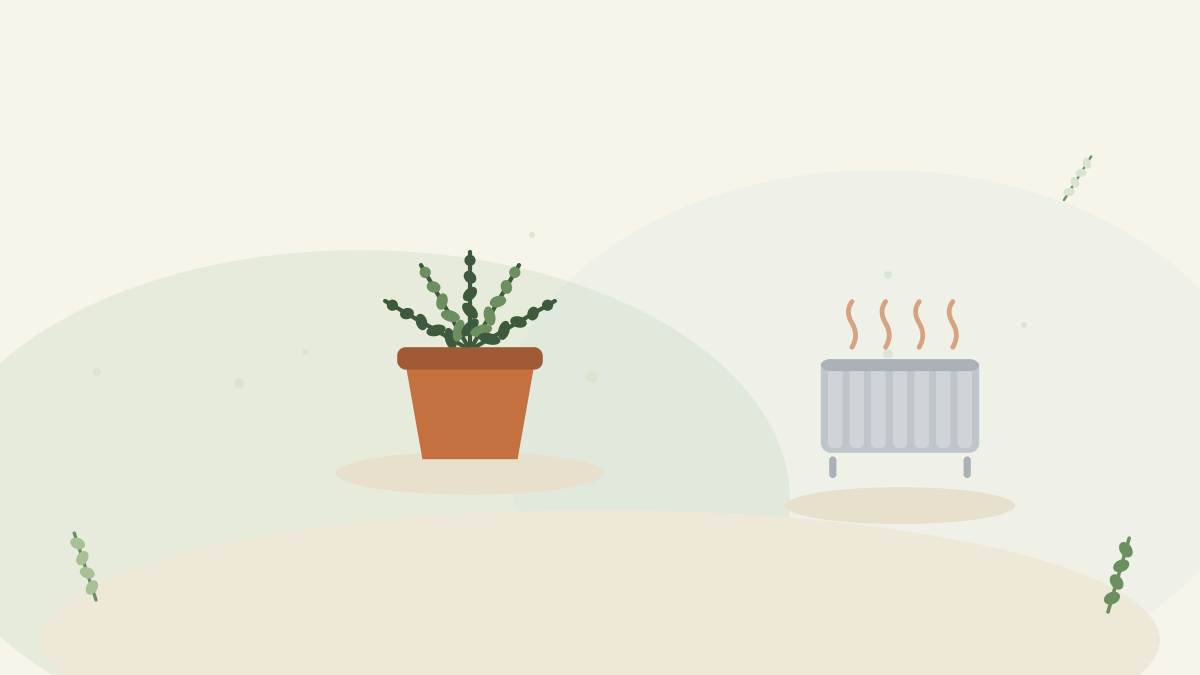
Most popular succulents slow or stop growing in the low light of winter, and the care shifts with them, straight from the houseplant-winter playbook but more extreme: water far less (a monthly trickle or less for many types, since a dormant plant in cold damp soil rots readily), chase the light to the brightest available sill, and keep them cool rather than cozy — many succulents actually appreciate a cool, bright winter rest, and some even set flower buds off it. The one winter hazard beyond overwatering is cold glass: a leaf pressed against a freezing window can take damage, so leave the small air gap. Feeding stops entirely; there is nothing to feed. Come spring, growth resumes, watering frequency climbs back with the drying speed, and a weak feed or two through the growing season is all the fertilizer they ever want.
Propagation: One Plant Into Many
- Leaves are free plants: a plump leaf removed cleanly (or fallen naturally) is laid on top of gritty soil, left in bright indirect light, and — with patience over weeks — grows tiny roots and a baby rosette at its base. The original leaf shrivels as it feeds the new plant. Mist the soil lightly rather than soaking.
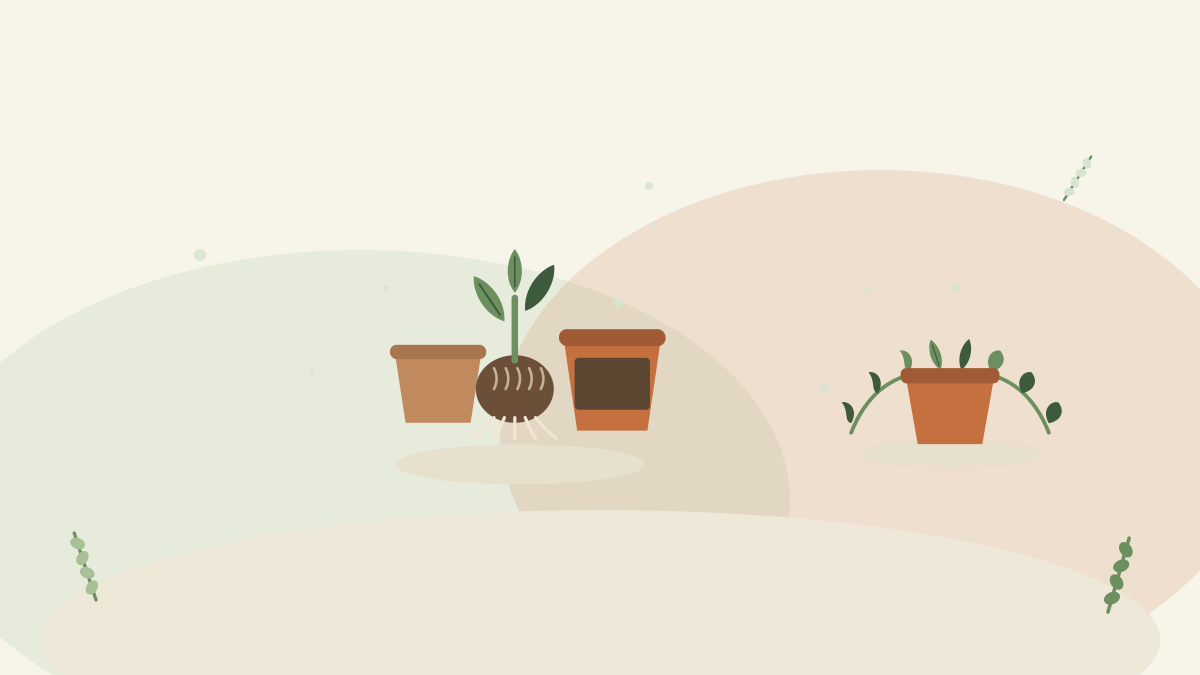
- Beheading makes two: the etiolation and rot fixes double as propagation — the cut top, callused for a few days then set on soil, roots into a new plant, while the base frequently sprouts offsets.
- Offsets ("pups") that many succulents produce around their base can be separated once they have a few roots and potted individually.
- The whole craft rewards patience and dryness: succulent propagation fails from too much water and moving pieces too soon, not from difficulty. Callusing cut surfaces before soil contact is the one step beginners skip and regret.
Choosing Well: Honest Picks
- Genuinely forgiving: the tougher, well-known types (jade, aloe, many haworthias, and the hardy sedums) tolerate a wider range of light and neglect than the delicate rosettes — a better first purchase than a bargain tray of unlabeled softies.
- Beautiful but demanding: the vivid echeveria rosettes everyone photographs need the most light and are the first to etiolate indoors — buy them knowing they want your brightest sill or a grow light.
- Not actually beginner-proof: some trending "succulents" (certain string-of-things and highly bred cultivars) are fussier than the tag admits; the compact classics are kinder learning plants.
- Pet households: check toxicity before buying — several common succulents are mildly toxic to cats and dogs, and a few (like certain aloes and euphorbias) more so; the pet-safe houseplant logic applies here too.
Popular Succulents at a Glance
| Type | Character | Honest note |
|---|---|---|
| Jade plant | Tough, tree-like, long-lived | Excellent first succulent; tolerates a wide range and grows into an heirloom |
| Aloe vera | Architectural, useful, forgiving | Bright light, sparse water; mildly toxic to pets if eaten |
| Haworthia | Small, tidy, shade-tolerant | The most forgiving on light — happy on a modestly bright sill |
| Echeveria | The photogenic rosette | Wants your brightest spot; first to etiolate; buy knowing this |
| Sedum / stonecrop | Trailing and mounding types | Hardy and easy; some suit outdoor pots and windowboxes |
| Snake plant | Upright, near-indestructible | Technically a succulent-like plant; the low-light champion (its own guide) |
| String-of-things | Trailing, trendy, delicate | Fussier than the tag admits; bright light and very careful watering |
The Summer-Sun Surprise
One counterintuitive point trips up new growers: even sun-loving succulents can burn. A plant grown soft indoors or in a shop, then moved abruptly into fierce direct summer sun — especially behind glass, which concentrates heat — can scorch, showing brown or bleached patches that don't heal. The fix is the acclimation from the light section: increase strong sun gradually over a week or two rather than all at once. The flip side is the reward: succulents given enough light often develop their most intense colors — reds, purples, oranges blushing at the leaf edges — a phenomenon growers call "stress coloring" because it appears when the plant gets the bright, lean conditions it evolved for. A green, stretched succulent and a compact, blushing one are the same plant under different light budgets.
Succulents Outdoors and in Arrangements
Many succulents make superb outdoor container plants in summer, and the hardy sedums and sempervivums (houseleeks) live outside year-round even through frost — a rock garden, a shallow bowl, or a green roof of them needs almost no care beyond the drainage they demand. The popular shallow succulent arrangements sold in gift shops look wonderful but hide a catch worth knowing: crammed together in a holeless dish of dense soil, they're set up for exactly the rot this guide warns against. If you inherit one, the kind move is to separate the plants into individual holed pots of gritty mix once they start struggling — they'll thrive apart far longer than they survive crowded. The arrangement is a bouquet; the potted plants are the garden.
The Classic Mistakes
- The regular little sip that keeps soil damp — the number-one killer, retired by soak-and-abandon.
- A dim shelf chosen for looks, answered with etiolation.
- The holeless pretty pot, a slow reservoir.
- Standard soil holding water the plant cannot use.
- Panic-watering a wrinkled plant into mush instead of reading thirst vs rot.
- Winter watering on the summer schedule.
The Bottom Line
Succulents are easy — but only on their own terms, which are the desert's, not the houseplant shelf's. Give them the brightest light you have, gritty soil in a holed pot, and the soak-and-abandon rhythm that drenches then walks away until bone dry. Read a wrinkle as thirst and a mush as rot, let them rest cool and dry through winter, and turn every dropped leaf and leggy top into a new plant. Do that and the tag finally tells the truth: give a succulent the right neglect and it will outlive almost everything else on the sill.
Comments
No comments yet. Be the first to share your experience.