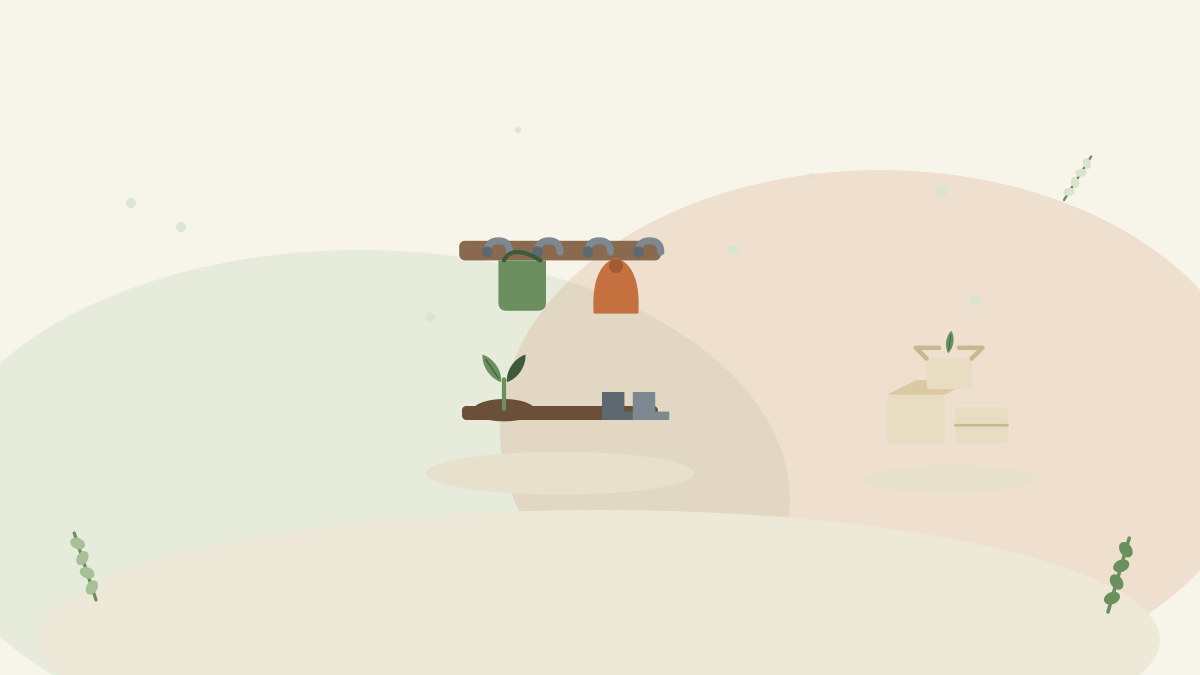
The entryway is a paradox: the smallest, busiest, most-seen space in the home, and almost universally the most chaotic. It's the first thing you see coming home and the last thing guests see of your house's public face — and it's buried under coats that missed the hook, shoes kicked off in a heap, a table drowning in post, and keys that are, as always, nowhere. The entryway's clutter is so demoralizing precisely because it greets you every single time you walk in.
The good news: the fix is almost never more storage. It's a system — giving every single thing that arrives through the door a designated home, so the drop zone stops functioning as a dumping ground. This guide builds that system from the landing-strip principle up: the zones every entryway needs, solutions for the tiniest spaces, and the two-speed reset that keeps it tidy for good.
The Landing-Strip Principle
Every home needs a "landing strip" — the designated spot where the things you carry in and out live, so they stop scattering across the house. The entryway is that strip, and its whole job is to catch and hold the daily in-and-out: keys, wallet, phone, bag, coat, shoes, post, and the seasonal extras (umbrella, gloves, sunglasses, dog lead). When each of these has an assigned home right by the door, three things happen: you stop losing them, they stop migrating into the rest of the house, and the entryway stays clear because everything that lands has somewhere specific to go. Clutter is almost always just things without a home; the landing strip gives the door's traffic exactly that.
The Zones Every Entryway Needs
Regardless of size, an entryway works when it covers the FAQ's four functions. Think of them as zones, however small:
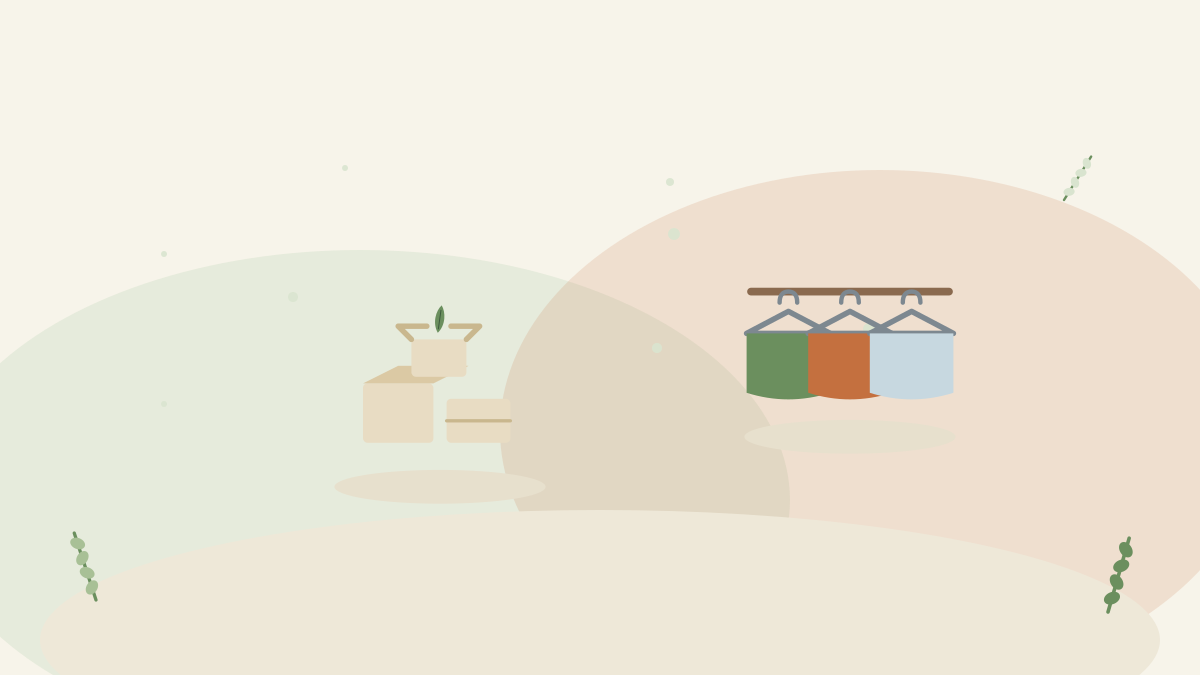
- The hanging zone: hooks or a rack for coats and bags. Hooks beat hangers for daily use — a coat on a hook takes a second, a coat on a hanger takes a decision, and decisions are what create the floor pile. A row of hooks is the single highest-impact entryway item.
- The key-and-pocket zone: a tray, bowl, or dish for keys, wallet, phone, and pocket clutter, right where your hand naturally lands. This one small habit ends the eternal key hunt.
- The shoe zone: a rack, basket, mat, or bench — anywhere shoes have a defined home instead of a scattered heap. Contain them and the whole space reads as tidy.
- The landing surface: a shelf or small table for the daily drop and the post — small is fine, but a defined surface stops things landing on the floor.
Fit those four and the entryway functions. Everything beyond them is a welcome upgrade, not a requirement.
Solutions for Tiny Entryways
Most entryways are small or barely exist — a scrap of hallway, a patch by the door. The FAQ's answer is the whole strategy: go vertical and multi-functional instead of adding furniture.
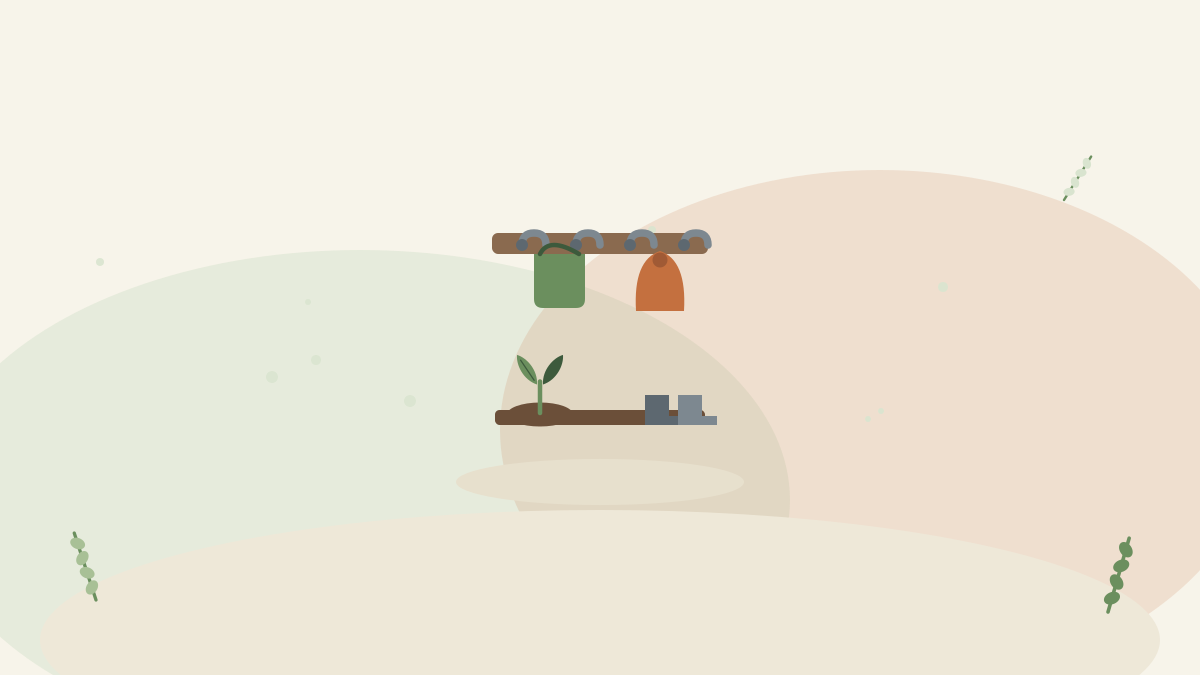
- Wall hooks are the tiny-space hero — coats, bags, and keys all hang on the wall, using zero floor space. A single well-placed rail can hold the entire hanging zone.
- Over-door organizers add shoe and accessory storage without touching the floor.
- A slim console, floating shelf, or even a small wall-mounted ledge gives the landing surface without narrowing the passage.
- A narrow shoe rack or a single basket contains footwear in minimal width.
- A mirror (with a tiny shelf, ideally) does double duty — the last-look-before-leaving spot and a visual space-doubler in a cramped hall.
- Vertical stacking: hooks high, shelf in the middle, shoes and basket at floor level — one strip of wall holds a complete system, the small-space-organizing logic from the wardrobe and kitchen guides applied by the door.
Taming the Surface: The Anti-Dumping-Ground Rules
The horizontal surface by the door is a clutter magnet, and the FAQ's fix is interception plus a reset:
- One tray or bowl for keys and pocket items — a single landing spot, so they're contained, not scattered.
- A defined place for post, with the one-touch habit borrowed from the desk guide: sort incoming mail quickly — recycle, action, file — rather than letting it breed into a pile.
- A small bin or basket for the genuinely miscellaneous, so odd items have a home instead of colonizing the surface.
- The clear-surface rule: the landing surface is for landing, not storing — anything that lands gets swept back to its home in the daily reset. A surface with an enforced "empty" default stays usable.
Contain the Small Stuff
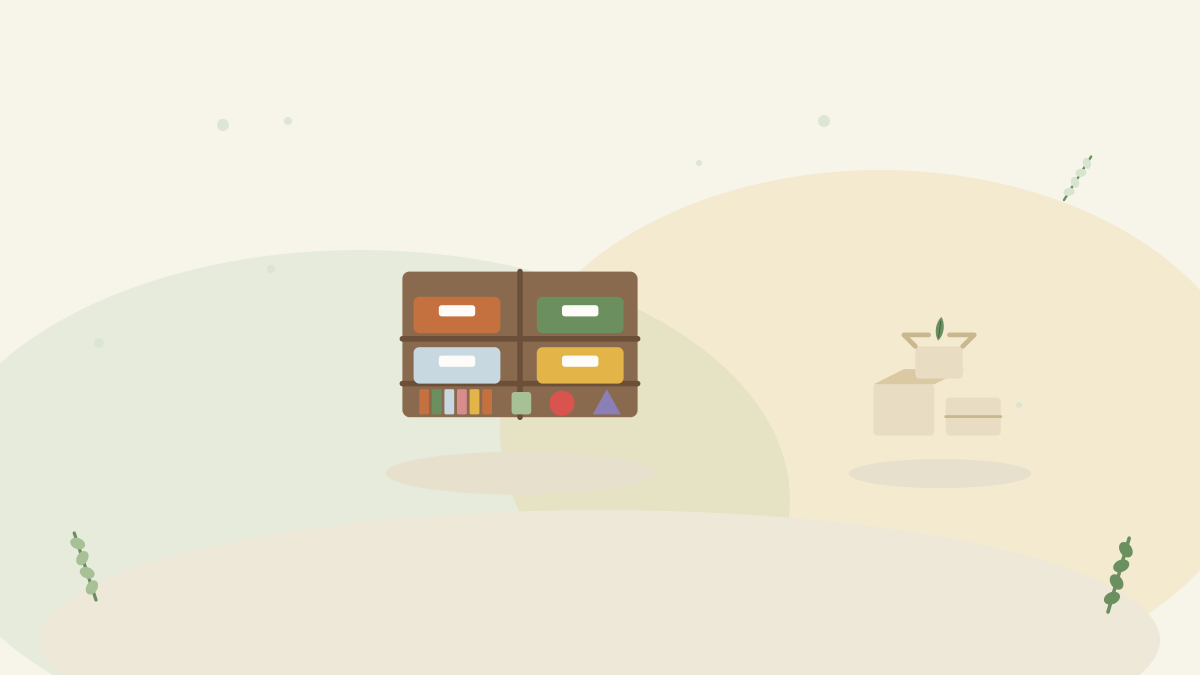
- Baskets and bins corral the chaos of hats, gloves, scarves, and the odds and ends — labelled if you like, so everyone knows where things go and, crucially, where they return.
- A bench with storage under it is the entryway multi-tasker: somewhere to sit and put shoes on, with shoe or basket storage in the base.
- Hooks at child height let kids hang their own coats and bags — the entryway that works for the whole household is the one that stays tidy, because everyone can reach their own home for things.
- A dedicated spot for the leave-the-house essentials — the dog lead, the reusable bags, the umbrella — means you actually grab them on the way out instead of forgetting them.
Keeping It That Way: The Two-Speed Reset
An organized entryway that slides back into chaos was set up without a maintenance rhythm. The FAQ's two speeds keep it for good:
- The daily reset is the ten-second habit woven into coming and going: coat on the hook, keys in the tray, shoes on the rack on the way in; surface swept back to its homes on the way through. It's effortless because everything has a place — you're putting away, not deciding.
- The seasonal edit handles accumulation: every few months, remove the coats and shoes that don't belong to the current season and store them elsewhere, so the entryway only ever holds what's genuinely in use. This is the same seasonal-rotation principle the wardrobe guide runs on — and it's what stops the hooks and rack from silently overflowing over the year.
Reset daily, edit seasonally, and the drop zone simply doesn't become the dumping ground again — the system holds because maintaining it costs seconds, not effort.
The Mudroom Principle, Scaled to Any Home
The mudroom — a dedicated transition room between outside and in — is the entryway's luxury form, and while few homes have one, its principles scale down to any threshold. The core idea is separation of dirty from clean: a place to shed the outside (muddy boots, wet coats, bags) before it travels into the living space. Even without a room, you can borrow the logic: a boot tray or mat catches the worst of the dirt at the door, a place to sit makes removing shoes easy (which makes a no-shoes-inside habit actually stick, sparing your floors and your cleaning time — the mudroom's real gift), and hooks for wet coats keep them off furniture. For households with pets, children, or muddy hobbies, building even a small "mudroom zone" — a corner with a mat, a bench, hooks, and a basket — intercepts an enormous amount of dirt and clutter before it spreads, which is why the entryway is quietly one of the highest-leverage spaces to organize in the whole home.
The Entryway as First Impression
Beyond function, the entryway sets the tone — for you every homecoming, and for anyone who visits. A small amount of care here pays back daily: a clear surface with one considered object (a plant, a bowl, a framed print), a mirror that brightens and enlarges, decent light, and maybe a small rug that defines the space and catches the worst of the outdoor dirt. The organized entryway isn't just practical; it's the calm, welcoming threshold that makes the whole home feel more ordered the moment you step in. Getting the busiest square metre right lifts the entire house.
The Family Entryway: Making It Work for Everyone
A shared entryway lives or dies by whether every member of the household can use it without thinking — because a system only one person maintains isn't a system, it's a chore. The principles that make it universal: hooks and storage at the right heights for everyone, including children (a child who can reach their own hook hangs their own coat; a child who can't creates a floor pile someone else clears), a clearly assigned spot per person where possible (a hook each, a basket each, a shelf each), and simple enough labelling or obvious-enough homes that no one has to ask where things go. The payoff compounds in a busy household: mornings run smoother when everyone's shoes, coat, and bag live in a known place, and the endless "where are my keys / shoes / the other glove" chorus quiets down. The entryway that works for the whole family is the one that actually stays organized, because maintenance is distributed instead of falling on one exhausted person.
Shared and Apartment Entryways
Flats and apartments pose the tightest version of the challenge: often there's no real entryway at all, just a door opening straight into the living space. The solution is to define a threshold zone even where the architecture doesn't provide one — a small rug, a narrow console or wall shelf, and a row of hooks by the door create a psychological and functional entryway out of thin air, telling everyone (and yourself) "this is where outside things stop and get put away." A shoe rack or basket right at the door contains the dirt and clutter before it travels into the living space, which matters far more in an apartment where the entryway and living area are the same room. The goal is the same as any entryway — intercept the daily in-and-out and give it a home — just achieved with a defined corner rather than a dedicated room. Even the smallest studio benefits from a two-hook, one-shelf, one-basket threshold that keeps the outside world from colonizing the living space.
The Classic Mistakes
- Relying on hangers where hooks belong — the decision friction that creates the floor pile.
- No home for keys, and the eternal hunt that follows.
- Letting post land and breed instead of the one-touch sort.
- Buying big furniture for a small space instead of going vertical.
- Skipping the daily reset, so the system silently refills.
- Never doing the seasonal edit, so a year of coats and shoes accumulates.
The Bottom Line
The entryway is the busiest, most-seen square metre in the home, and taming it isn't about more storage — it's about giving every arriving thing a designated home. Cover the four functions — hang, keys, shoes, landing surface — going vertical and multi-functional where space is tight. Intercept the clutter with a key tray and a one-touch mail habit, contain the small stuff in baskets, and hold the whole thing with the two-speed reset: ten seconds daily, a quick edit seasonally. Do that, and the drop zone stops being a dumping ground and becomes what it should be — a calm, functional threshold that makes coming home a pleasure and the whole house feel more ordered.
Comments
No comments yet. Be the first to share your experience.